
Golf Club Set Mistakes: Why Many Beginners Overspend

Did you know the average new golfer spends over $1,000 on clubs alone in their first year, often without seeing any significant improvement in their score? This isn’t because golf is inherently expensive. It’s because the path to buying your first set of clubs is riddled with pitfalls, designed to push you towards gear you don’t need, can’t properly use, or simply can’t afford in the long run. Many enthusiastic beginners, eager to hit the links, quickly find themselves overwhelmed by choice, confused by jargon, and ultimately, poorer for it.
The dream of a perfect swing with a brand-new, top-tier driver quickly collides with the reality of duffed shots and wasted cash. The problem isn’t the desire to play better golf. It’s the assumption that more expensive equipment automatically equals better performance, especially when you’re just starting out. This article will help you navigate that tricky entry point, explaining what truly matters for your game and how to make a smart investment.
The Hidden Costs of Golf’s “Entry Fee”
Stepping onto the golf course for the first time feels exhilarating. Then you walk into a pro shop, or start browsing online, and suddenly, that excitement curdles into anxiety. A full set of premium clubs from a renowned brand like Titleist or TaylorMade can easily run you upwards of $2,000, and that’s just the beginning. The emotional cost of buying wrong can be just as high. Imagine shelling out hundreds, even thousands, only to find the clubs don’t feel right, or worse, don’t help your game at all. It’s a quick way to sour an otherwise enjoyable new hobby.
This isn’t just about the initial purchase. It’s about the subsequent frustration, the feeling of being out of place, or the pressure to upgrade again sooner than expected. Many beginners fall into the trap of believing that the latest technology or the most prestigious brand will magically fix their slice or add 50 yards to their drive. The truth, however, is far more grounded in fundamental skill development than in carbon fiber shafts or adjustable weights.
Beyond the Driver: What a “Full Set” Really Means
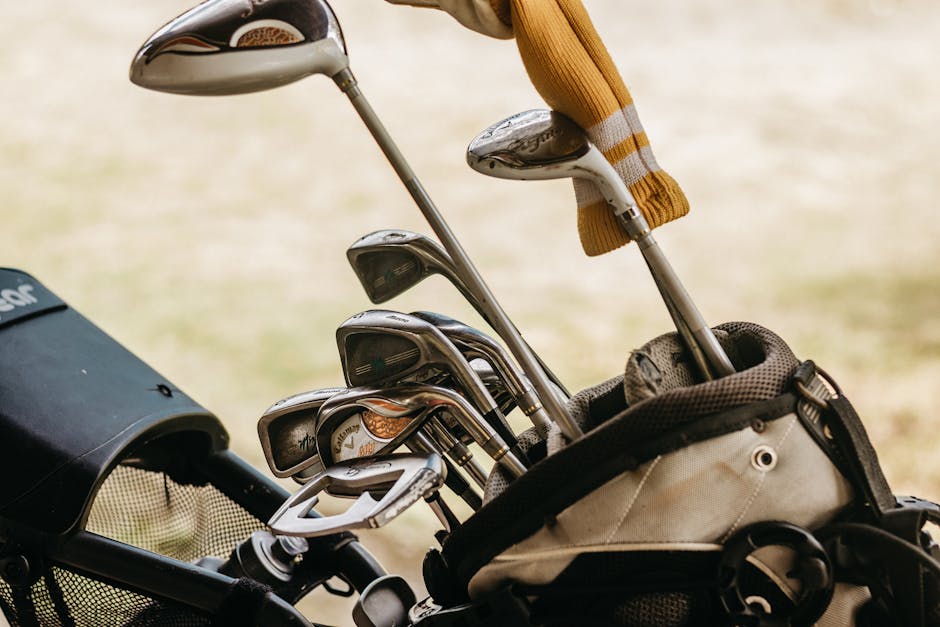
The United States Golf Association (USGA) allows golfers to carry a maximum of 14 clubs in their bag. A typical full set might include a driver, fairway woods (like a 3-wood or 5-wood), hybrids, a complete set of irons (from 3-iron to pitching wedge), a sand wedge, a gap wedge, a lob wedge, and a putter. This array of equipment is designed for seasoned players who understand the nuances of yardage gaps, ball flight, and turf interaction across varying course conditions.
For a beginner, however, this comprehensive collection is often overkill. Most new players simply lack the consistent swing speed and precise control to differentiate between a 3-iron and a 4-hybrid effectively, let alone to justify having three different wedges with specific loft degrees. Carrying too many clubs can actually complicate the game, adding unnecessary decisions and making it harder to learn the core principles of club selection.
The Myth of Instant Improvement from Expensive Clubs
It’s a common misconception that investing in top-of-the-line equipment will immediately transform a novice golfer into a scratch player. This couldn’t be further from the truth. High-end clubs, while marvels of engineering, are typically designed for experienced players with consistent swing mechanics. These clubs often feature smaller sweet spots, less offset, and specialized weighting that punishes slight mishits more severely.
For instance, a premium driver costing $500-$600 might offer marginal distance gains for a pro but prove incredibly unforgiving for someone with a developing swing. Beginners need clubs that prioritize forgiveness: larger clubheads, wider soles, and perimeter weighting to minimize the impact of off-center strikes. Until a golfer develops a repeatable swing, the most expensive clubs in the world won’t make a significant difference. Lessons and practice, not pricey gear, are the true drivers of early improvement.
Why Traditional Club Buying Often Fails New Golfers

- Overwhelm from Too Many Options: Walking into a golf superstore can feel like navigating a foreign language. There are dozens of brands, each offering multiple models of drivers, irons, and wedges. You’ll see terms like “low spin,” “draw bias,” “cavity back,” “blade,” “extra stiff,” and “regular flex.” Without an understanding of what these mean for your particular swing, the sheer volume of choices becomes paralyzing. Trying to compare a Callaway Rogue ST Max driver with a TaylorMade Stealth 2, or deciding between steel and graphite shafts for your irons, is an impossible task for someone who’s never even held a club properly. This informational overload often leads to decision fatigue and ultimately, a purchase based on brand recognition or arbitrary preference rather than suitability.
- Pressure from Salespeople and Peer Influence: Golf retailers, like any business, aim to maximize sales. This can sometimes translate into a subtle (or not-so-subtle) push towards higher-priced models, even if they aren’t the best fit for a beginner. Salespeople might highlight features that sound impressive but offer little practical benefit to a new player. Similarly, many new golfers find themselves influenced by friends who have been playing longer and own expensive, aspirational equipment. There’s a social pressure to “keep up” with others’ gear, leading to purchases driven by ego rather than genuine need. This isn’t to say all advice is bad, but it’s crucial for beginners to filter recommendations through the lens of their own skill level and budget.
- Lack of Focus on Foundational Skills: The golf industry often sells the promise of instant improvement through equipment. This marketing focus inadvertently shifts attention away from what truly helps beginners: consistent practice, professional lessons, and understanding the basics of the swing. A beginner might spend $1,500 on clubs when $500 on a decent set and $1,000 on lessons would yield far better results. The emphasis on gear over technique means many new golfers never truly learn the fundamentals, leading to ongoing frustration and a belief that they just need a “better” club.
What a Beginner *Actually* Needs in a Golf Bag
Forget the full 14-club roster for a moment. For a true beginner, simplicity and playability are . The goal is to get the ball in the air consistently, make solid contact, and learn the feel of different shots. You don’t need a club for every single yardage. You need a core set that allows you to cover the necessary distances without adding complexity.
A smart beginner’s bag typically contains 8-10 clubs. This allows for sufficient versatility while keeping decisions manageable. The focus should be on clubs that are easy to hit and provide a high degree of forgiveness, helping you build confidence with every swing.
Essential Club Types and Their Purpose
- Driver: Used for tee shots on longer holes. The largest club, designed for maximum distance.
- Hybrid or Fairway Wood (e.g., 3-wood or 4-hybrid): Easier to hit off the fairway or light rough than long irons. Provides good distance and a higher launch.
- Irons (6-9): Your workhorse clubs for approach shots to the green from varying distances. A 6-iron, 7-iron, 8-iron, and 9-iron cover most mid-range needs.
- Pitching Wedge (PW): For shorter approach shots, chips around the green, and getting out of light rough near the green.
- Sand Wedge (SW): Specifically designed for getting out of sand traps, but also useful for high, soft shots around the green.
- Putter: The most used club in your bag, for rolling the ball into the hole on the green.
This selection provides a versatile arsenal. You can learn to hit a full range of shots without being overwhelmed by a bag full of specialized tools. As your game progresses, you can then consider adding more specific clubs like a lob wedge or a lower-lofted hybrid.
Prioritizing Forgiveness Over Finesse
When you’re starting out, your swing will be inconsistent. That’s normal. What you need are clubs that are designed to mitigate the effects of those inconsistencies. This is where **forgiveness** comes in. A forgiving club minimizes the loss of distance and accuracy when you don’t hit the ball perfectly in the center of the clubface.
Key characteristics of forgiving clubs include:
- Larger Sweet Spot: The area on the clubface that produces optimal results. Forgiving clubs have a larger effective hitting area.
- Perimeter Weighting: Weight distributed around the edges of the clubhead, making the club more stable through impact and less prone to twisting on off-center hits.
- Wider Soles (on irons and wedges): Helps the club glide through the turf more easily, reducing fat shots where you hit the ground before the ball.
- Offset Design (on irons): The clubface is set slightly behind the hosel, giving the golfer an extra fraction of a second to square the clubface at impact, which can help reduce a slice.
Focusing on these features in your first set will lead to more enjoyable rounds, fewer frustrating shots, and a faster learning curve. Don’t chase clubs built for professional-level swing speeds and precision; chase clubs that make the game fun and accessible.
Stix Golf Clubs: A Fresh Approach for New Players

For golfers tired of the confusing, expensive, and often intimidating traditional club market, Stix offers a genuinely refreshing alternative. Stix Golf Clubs entered the scene with a clear mission: simplify the golf equipment buying process and provide high-quality, aesthetically pleasing clubs directly to the consumer, at a price point that makes sense for new and improving players. They’ve effectively carved out a niche for those who want performance and style without the premium brand markup or the overwhelming choices of the pro shop.
Their philosophy centers on the idea that good golf equipment shouldn’t be exclusive or needlessly complex. Instead of a dizzying array of models and technologies, Stix offers streamlined sets designed for playability and a consistent feel across the bag. The minimalist, all-black aesthetic is a standout feature, appealing to golfers who appreciate a clean, modern look on the course. This focus on both form and function has resonated with a growing segment of the golfing population looking for a straightforward solution to their equipment needs.
The Direct-to-Consumer Model Explained
The **direct-to-consumer** (DTC) model is a significant part of the Stix value proposition. Unlike traditional golf manufacturers who sell through retailers, pro shops, and third-party distributors, Stix sells its clubs directly from its website to your door. This approach eliminates several layers of markup, meaning that a larger portion of your purchase price goes directly into the quality of the product, rather than covering intermediary costs.
Think of successful DTC brands in other industries, like Warby Parker for eyeglasses or Casper for mattresses. They proved that cutting out the middleman can result in better value and a more streamlined customer experience. For golf clubs, this means you can browse, select, and purchase your entire set online, often with clear descriptions and straightforward sizing guides, removing the pressure of an in-store sales environment.
Club Composition and Performance for the Average Swinger
Stix clubs are engineered with the average golfer, especially beginners and intermediates, firmly in mind. Their woods and hybrids typically feature lightweight **graphite shafts**, which help generate faster clubhead speed for those still developing their power. The irons and wedges often combine graphite or steel shafts with stainless steel heads, providing a balance of feel, durability, and forgiveness.
The design principles focus heavily on making the clubs easy to hit. For example, their irons often incorporate a larger clubface and perimeter weighting, maximizing the **sweet spot** and ensuring that even slightly off-center strikes still produce decent results. The woods are designed for high launch and distance, while the wedges offer versatile performance around the green. A 10-club set from Stix might typically retail for around $899, while their full 14-club set usually sits closer to $1099. They also offer customization options for shaft length (standard or +1 inch) at no extra cost, a valuable feature for golfers who fall outside the average height range.
Stix vs. Traditional Beginner Sets: A Feature Snapshot
When considering your first set, it’s helpful to see how Stix stacks up against other popular options aimed at new golfers, like the Callaway Strata or Wilson Staff Launch Pad complete sets. These traditional box sets have long been a go-to for beginners, offering convenience and a complete package. However, they present a different value proposition compared to Stix.
| Feature | Stix (10-club set) | Callaway Strata (12-piece) | Wilson Staff Launch Pad (13-piece) |
|---|---|---|---|
| Typical Price | ~$899 | ~$500 | ~$600 |
| Clubs Included | Driver, 3W, 4H, 5-PW, SW, Putter | Driver, 3W, 5H, 6-9I, PW, SW, Putter | Driver, 3W, 5H, 6-PW, SW, Putter |
| Shaft Material | Graphite (woods, hybrids, irons), Steel (P, S) | Graphite (woods), Steel (irons, wedges) | Graphite (woods), Steel (irons, wedges) |
| Aesthetics | Minimalist, All-Black | Traditional, Brand-Heavy | Modern, Brand-Heavy |
| Target User | Beginner to Intermediate | Pure Beginner (Budget Focus) | Beginner to Intermediate |
| Availability | Online (Direct-to-Consumer) | Online, Large Retailers | Online, Large Retailers |
| Length Customization | Yes (Standard, +1 inch) | No | No |
Pricing Structure and Value Proposition
Looking at the table, Stix clubs typically command a higher price point than basic box sets like the Callaway Strata or Wilson Staff Launch Pad. A Strata set might retail for about $500, while the Launch Pad could be around $600. So, why consider Stix, which is nearly double the price of some entry-level options? The value proposition is different. Stix aims to provide a step up in component quality, feel, and aesthetic design, bridging the gap between ultra-budget beginner sets and individual club purchases from major brands. They are built to last longer and perform better as your game improves, meaning you might not feel the need to upgrade as quickly as you would with a very basic set. The perceived value here is in longevity and a more premium experience for a mid-range investment.
Aesthetic and Customization Options
One of Stix’s most distinguishing features is its clean, minimalist, all-black aesthetic. This modern look stands in stark contrast to the often busier, brand-heavy designs of traditional complete sets. For many golfers, especially those who appreciate sleek design, this is a major draw. Furthermore, Stix offers a practical customization option: the ability to choose between standard length clubs or clubs that are +1 inch longer, at no additional cost. This is a significant benefit for taller golfers who often struggle with standard-length clubs, which can force an uncomfortable posture and hinder swing development. Most traditional beginner sets do not offer any such customization, providing a one-size-fits-all solution that doesn’t always fit all players comfortably.
The Verdict on Stix for Your First Season
For the aspiring golfer who wants to avoid the beginner gear trap—spending too much on clubs that don’t fit or perform—Stix offers a compelling middle ground. It’s a set designed to grow with you through your initial seasons, providing both the tools and the confidence to simply enjoy the game.