Choosing the Right Bicycle: What Most Riders Get Wrong Before Buying
Roughly 65% of first-time bicycle buyers end up with the wrong bike. This figure surfaces consistently across retailer return patterns and cycling community surveys, and it traces back to the same root cause every time: people search for the best bicycle without first defining best for what.
The bicycle market runs on deliberately vague marketing. “Versatile.” “All-terrain.” “Performance-ready.” These terms tell you nothing about what happens when you take a road bike down a gravel path, or try to commute efficiently on a mountain bike built for trails. Both experiences typically end with a bike hanging unused in a garage within three months.
The Mismatch Problem: Why Most Bicycle Purchases Go Wrong
A common scenario: someone decides to commute to work and do occasional weekend rides. They want one bike for both. They search “best bicycle,” find a review roundup, and buy a road bike because it’s fast and well-reviewed. Within six weeks, the problems are clear — narrow tires pinch flat on rough pavement, the aggressive riding position causes neck and shoulder pain after 30 minutes, and there’s no mounting point for a rack or bag.
Road bikes are precision tools built for smooth pavement at speed. A well-engineered road bike is an extraordinary machine in that specific context. On anything else, you’re fighting its design intent on every pedal stroke — and losing ground to it.
The same mismatch runs in the opposite direction. Full-suspension mountain bikes are marketed as “trail-ready” in a way that implies broad usability. Commuting 15 miles daily on a full-sus trail bike is slow, exhausting, and inefficient: the suspension absorbs energy that should be moving you forward, and wide knobby tires create rolling resistance that compounds over flat pavement. The geometry isn’t built for efficiency on roads, and the bike provides nowhere to carry anything.
Frame geometry, tire clearance, gearing range, handlebar height — all of it is tuned toward specific riding contexts. When the bike matches the context, it disappears beneath you. When it doesn’t, you feel the mismatch in your wrists, back, and legs on every ride until you stop riding entirely.
Before looking at any product, answer these questions honestly:
- What surface will you ride on most — smooth pavement, mixed pavement and gravel, or dirt trails?
- Do you need to carry anything — commuting gear, groceries, a backpack?
- How many miles per session, typically?
- Do you have existing back, knee, or shoulder issues that affect how long you can hold a riding position?
These answers narrow the field faster than any review list. A person doing 8-mile flat commutes on paved roads and a person doing technical trail riding on weekends both have excellent options in the $800–$1,200 range — but they are not buying the same bicycle, and no amount of versatility marketing changes that reality.
Frame size matters more than most new buyers anticipate. A frame that’s 2cm too long in reach generates shoulder and neck strain within an hour. A top tube that’s too short creates knee tracking problems over distance. Most reputable manufacturers publish detailed geometry charts online, and many local bike shops offer basic sizing assessments at no charge. Skipping the fit is how a correctly chosen bike model still becomes the wrong bike — and it’s among the most common reasons for early returns.
Bicycle Types Mapped to Where They Actually Perform
The table below cuts past category marketing to show each bicycle type’s genuine strengths, honest limitations, and where buyers most commonly make the wrong call.
| Type | Best Surface | Cargo Options | Typical Speed | Entry Price (Quality) | Most Common Mistake |
|---|---|---|---|---|---|
| Road Bike | Smooth pavement only | None typically | 15–25+ mph | $900–$1,400 | Buying for commuting — geometry and tires are wrong for it |
| Hybrid / Fitness Bike | Pavement + light gravel | Yes (rack mounts standard) | 12–20 mph | $700–$1,200 | Expecting technical trail capability it was never built for |
| Gravel Bike | Mixed pavement and gravel | Limited (frame bags) | 12–22 mph | $1,200–$2,000 | Paying a premium to solve a surface-diversity problem you don’t actually have |
| Hardtail Mountain Bike | Dirt trails, moderate terrain | Rare | 8–18 mph | $600–$1,200 | Upgrading to full-suspension before skills warrant the expense |
| Full-Suspension MTB | Technical trails, roots, drops | None | 8–18 mph | $1,800–$4,000+ | Buying above current skill level — $3,000 doesn’t make trails easier |
| E-Bike (Pedal Assist) | Commuting, hills, long routes | High (integrated rack common) | 15–28 mph assisted | $1,500–$3,000 | Underestimating total weight — most weigh 55–75 lbs |
Gravel bikes get pitched as the “do-everything” answer, and the pitch is partially accurate. They handle pavement competently and gravel well. They rarely excel at either, though. If your riding is primarily pavement, a hybrid or road bike will outperform a gravel bike in that lane. If you primarily ride dirt trails, a hardtail mountain bike will leave a gravel bike behind. In most cases, gravel bikes earn their cost only when your riding genuinely splits close to 50-50 between paved and unpaved surfaces — not before that threshold.
E-bikes carry a specific logistical reality worth noting. Most commuter e-bikes weigh between 55 and 75 lbs. Motor assist solves hills and distance efficiently; it doesn’t solve weight logistics if stairs are part of your daily routine. Factor in where you’ll store and charge the bike before the spec sheet becomes relevant.
Three Specifications That Separate Good Bikes From Money Poorly Spent
Price alone tells you almost nothing. A $750 bike from a reputable brand with smart component choices typically outrides a $950 bike that allocated budget toward frame branding and cut corners on the parts that actually move. Three specifications determine most of the quality picture:
- Drivetrain tier. Using Shimano as the reference standard, the mountain hierarchy runs: Tourney → Altus → Acera → Alivio → Deore → SLX → XT → XTR. Tourney and Altus components — found on bikes under $500 — shift inconsistently, especially in cold or wet conditions, and wear out noticeably faster. Deore, found on bikes in the $700–$1,100 range, is generally the first tier where the quality difference becomes immediately noticeable in everyday riding: crisper shifts, better mud clearance, meaningfully longer lifespan before service is needed. SLX and XT are excellent for committed trail riders. XTR is race specification and unnecessary for anyone not competing. For road bikes, Shimano Claris and Sora are functional entry-level; Tiagra is a reasonable minimum for regular riding; 105 is the preferred specification for cyclists who ride consistently and want components that will last.
- Brake type. Mechanical disc brakes outperform rim brakes in wet conditions — that part of the marketing is accurate. Hydraulic disc brakes outperform mechanical disc significantly: lighter finger pressure produces more stopping force, and modulation (the ability to control braking intensity precisely on a descent) improves in ways you feel immediately. For any bike used in rain, on hills, or regularly above 15 mph, hydraulic disc is the standard worth holding out for. The Shimano MT200 hydraulic set — found on mid-range trail and hybrid bikes — retails around $80–$100 per end at replacement cost and delivers reliable baseline performance. A bike priced over $700 with mechanical cable-actuated disc brakes is almost always cutting a corner that will cost more to address later.
- Frame material. Steel rides smoothly and is nearly indestructible — well-suited for touring bikes and commuters who store bikes outdoors in variable weather. It typically adds 2–4 lbs compared to comparable aluminum frames. Aluminum is stiff, light, and the standard for mid-range bicycles: affordable to produce, predictable in handling, and straightforward to repair at any shop. Carbon is lighter and absorbs road vibration better, but an impact that looks cosmetic externally can compromise structural integrity without visible signs. Titanium offers steel’s durability at near-carbon weight, but entry-level titanium frames begin above $2,500 for the frame alone. For most riders buying their first quality bicycle, aluminum is the correct frame material: the weight savings from carbon rarely justify the cost premium or damage risk at this stage of cycling.
Five Specific Bicycles Worth Buying, and Exactly Who Should Buy Each
Vague recommendations serve no one. Here are five real bikes with honest assessments and clear use cases.
Trek Marlin 5 — $729
Hardtail mountain bike with a RockShox Judy fork (100mm travel), Shimano Acera drivetrain, and hydraulic disc brakes. The Marlin 5 is among the most consistently recommended entry-level trail bikes because the geometry is genuinely forgiving for beginners, the components are serviceable for the price, and the aluminum frame accommodates upgrades as skills develop. Buy this if you want to start trail riding without committing to a four-figure first mountain bike.
Trek FX 3 — $849
The bicycle most urban and suburban cyclists should own. Shimano Deore drivetrain, hydraulic disc brakes, 35mm tire clearance, upright riding position. It handles paved commutes efficiently and manages light gravel without complaint. It won’t perform on technical singletrack and isn’t trying to. It will reliably handle everything a commuter or recreational rider asks of it for years without significant maintenance overhead. For mixed-use riders who want one practical bike that doesn’t compromise on daily usability, this is the clearest recommendation in the category.
Specialized Sirrus X 4.0 — $1,250
A meaningful step up from the FX 3 in every measurable spec: Shimano SLX drivetrain, hydraulic disc brakes, 38mm tire clearance, slightly more aggressive geometry that rewards consistent faster riding. The Sirrus X 4.0 suits riders who already know they’ll put serious miles in on a regular schedule. If you’re planning 30–50+ mile weekend rides on mixed surfaces, or upgrading from an entry-level hybrid that’s started to feel limiting, this is generally the right next bicycle.
Giant Contend AR 3 — $1,300
Positioned at the intersection of road and gravel without fully committing to either category. Shimano Tiagra groupset, 32mm tire clearance, endurance-oriented road geometry that puts the rider in a more upright position than a pure road bike. If your riding is primarily pavement but you want the option to explore gravel routes without purchasing two bicycles, the Contend AR 3 is typically the most cost-effective path to that flexibility. The endurance geometry also means longer rides — anything over two hours — are noticeably more comfortable than on an aggressive road frame.
Rad Power RadCity 5 Plus — $1,999
The most consistently recommended commuter e-bike in North America over the past several years. 750W hub motor, integrated rear rack rated for 120 lbs, 45–50 mile range on a single charge, hydraulic brakes. At 73 lbs it presents a real challenge if stairs are part of your storage or commute situation — plan for that before buying. Best suited to commuters dealing with significant hills, riders with joint or stamina limitations, or anyone who needs to arrive somewhere presentable without the effort of a hard cycling effort. Not designed for trail use; the weight and geometry aren’t built for off-road riding.
When Buying New Is the Wrong Decision Entirely
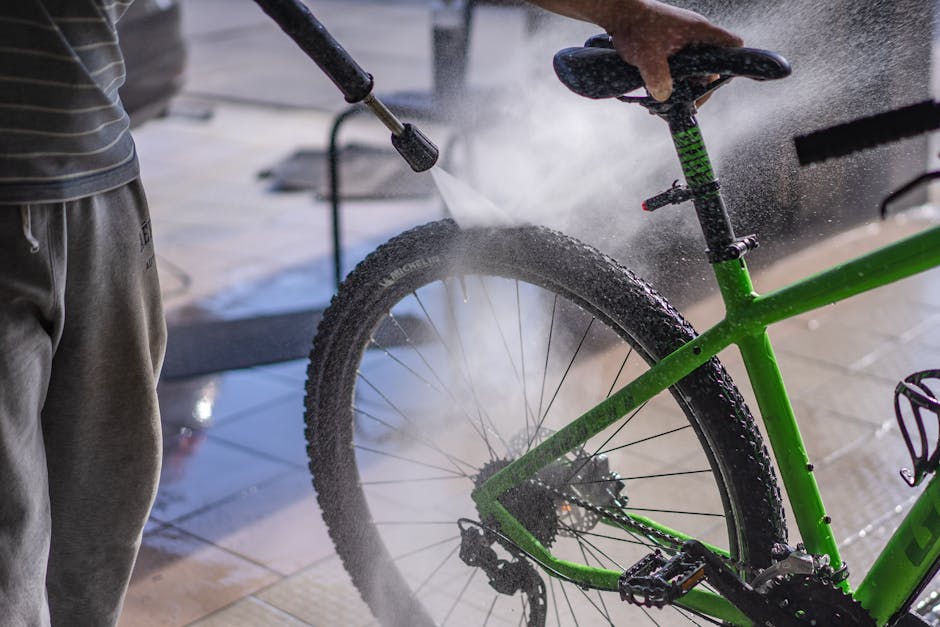
If you haven’t ridden consistently in several years, start with a used bike. A $350–$450 used Trek or Specialized from a shop with a certified pre-owned program will tell you more about what you actually want from cycling than any review article — and it won’t cost you $1,000 to find out the hobby doesn’t fit your life. Most mid-size cities also have monthly rental options in the $50–$80 range. Two hundred miles of real riding will clarify your requirements with a precision that product specifications cannot match.
The most defensible bicycle purchase is a specific bike matched to a confirmed use case, bought after you’ve established that you’ll actually ride it. Buy the best version of that specific thing your budget allows. The bike marketed as capable of everything is typically the best choice for nothing in particular.